
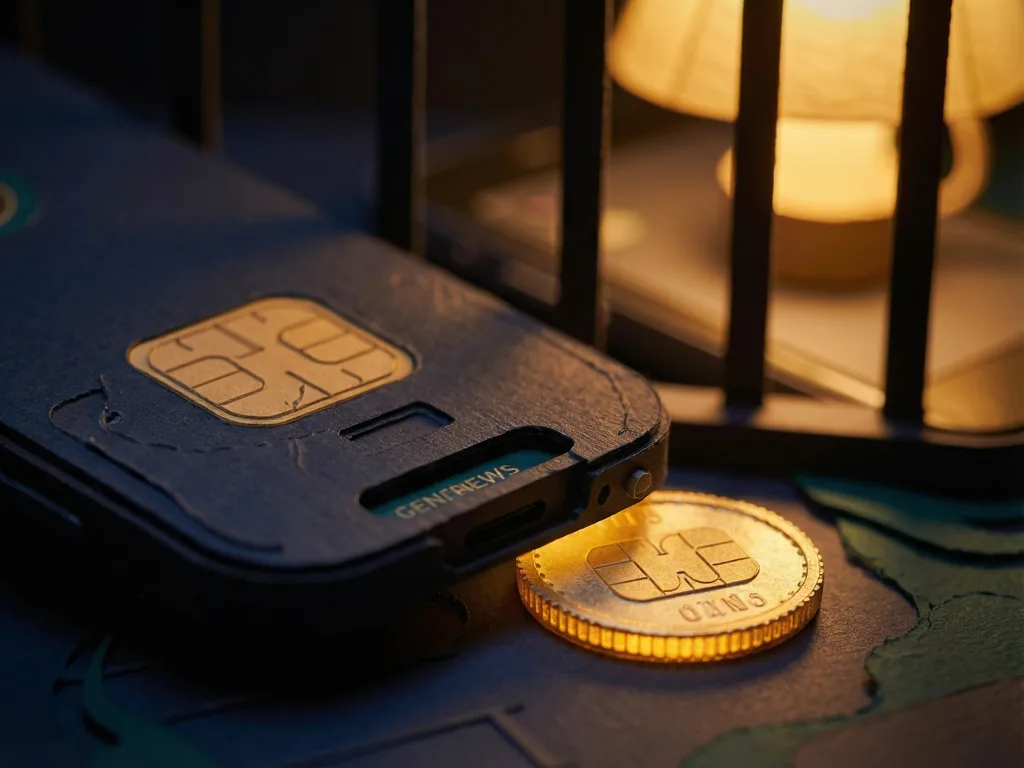
London man gets 2.5 years for SIM-swap crypto theft of £200,000
Key takeaways
A 25-year-old London man, Ajay Shinjin, also known as AJ Marley Cruz, has been jailed for two and a half years for his involvement in SIM-swap fraud, which saw four people lose £200,000 worth of crypto in November 2021. The City of London Police said he received more than £44,000 from the proceeds and used the money on luxurious vacations to Dubai, an expensive apartment, and gold-plated dental grills.
The case shows a direct route from telecom control to account access. BT spotted unauthorized activity in early November 2021, then found that customer phone numbers were being moved onto SIM cards controlled by criminals. With a number under their control, fraudsters could receive one-time passcodes by text and use them to get into a victim’s bank account or crypto wallet.
What happened
BT’s monitoring led investigators to the devices receiving the transferred numbers. Each device was eSIM-enabled and had two IMEI numbers, the serial codes that identify a handset. The telecommunications company’s data led to several suspects, and Shinjin was attributed to four of the devices.
All the victims reported their crimes in the first week of November 2021, and police detailed four thefts. In the first, about £40,000 in crypto was taken from a victim on November 2, and roughly £27,000 of it landed in Shinjin’s personal crypto account. In the second, a victim lost around £17,000 between November 5 and 7, and the full amount was later found in the defendant’s own wallet. Those two sums made up the £44,000 he received.
In the other two cases, Shinjin helped carry out the thefts while the money went elsewhere. About £8,000 left a third victim’s Coinbase account on November 3, and another £130,000 was stolen from a fourth victim on November 6 and 7. Shinjin was arrested in October 2023 at Heathrow Airport when coming from Dubai. Prosecutors charged him with one count of conspiracy to commit fraud by false representation and one count of transferring criminal property. He entered a guilty plea in late September 2026.
Detective Constable Simon Ardeman of the City of London Police said the fraud was complex and calculated and caused significant financial harm. He described SIM-swap fraud as sophisticated and increasingly concerning, and said the conviction sends a clear message that those who use technology to commit fraud will be brought to justice.
Market context
The £200,000 total loss sits in a much larger UK crypto-enforcement picture. Roughly a year ago, Zhimin Qian, a Chinese national, pleaded guilty in late September 2025 to acquiring criminal property in the form of crypto. That case was tied to what is believed to be the world’s largest cryptocurrency seizure: more than 61,000 BTC, worth over £5.5 billion ($7.43 billion).
Qian had defrauded over 128,000 victims in China between 2014 and 2017 before converting the proceeds into BTC. Will Lyne, the Metropolitan Police’s head of economic and cybercrime command, called it one of the largest money laundering cases in UK history. The Shinjin case is smaller in value, but it shows a more direct operational method: take control of a phone number, intercept passcodes, then move crypto.
The technical trail also matters. BT identified eSIM-enabled devices with two IMEI numbers, and the attribution of those devices to Shinjin helped connect individual thefts to a single suspect. This suggests that telecom device data can be as important to an investigation as the blockchain trail itself, although the source does not describe how the funds moved after leaving Shinjin’s wallet in the two larger thefts.
Why it matters
For readers, the main lesson is that crypto losses can start with an identity step outside the crypto account. The described method relies on one-time passcodes sent by text. If a phone number is moved onto a SIM card controlled by criminals, the person receiving the passcode can change from the account holder to the attacker.
The money trail also leaves uncertainty. Shinjin received more than £44,000, while the four victims lost £200,000. The source says he helped carry out thefts in the other two cases, with about £8,000 leaving a Coinbase account and £130,000 stolen from another victim, but the money went elsewhere. A sentence can establish guilt for the charged conduct, but it does not by itself confirm full recovery for victims or map the rest of the proceeds.
The spending detail gives a further signal. Luxurious vacations to Dubai, an expensive apartment, and gold-plated dental grills show that part of the proceeds were quickly converted into lifestyle spending. The source does not say whether any crypto was returned to the victims, so that remains unknown.
What to watch
One point to watch is how fraud cases separate the technical enabling step from the financial transfer step. Shinjin was charged with conspiracy to commit fraud by false representation and transferring criminal property, which focuses on coordinated deception and movement of proceeds, not only on the SIM-swap act itself.
Another is whether device-level telecom signals, such as eSIM features and IMEI numbers, become a more visible part of public case summaries. The source shows how BT data led to suspects and connected Shinjin to four devices. If more cases are described that way, the investigative chain from phone-number control to crypto wallet attribution may become clearer to readers.
Finally, the case should be read alongside larger UK crypto cases. City of London Police and Metropolitan Police references show that crypto-related enforcement is not limited to one type of loss. The Shinjin case shows a £200,000 SIM-swap theft, £44,000 directly attributed to one defendant, and a conviction that confirms the risk of text-based passcodes without answering where the rest of the stolen crypto went.
Comments 0