
Hong Kong warns on unlicensed payment platforms after 16 complaints
Key takeaways
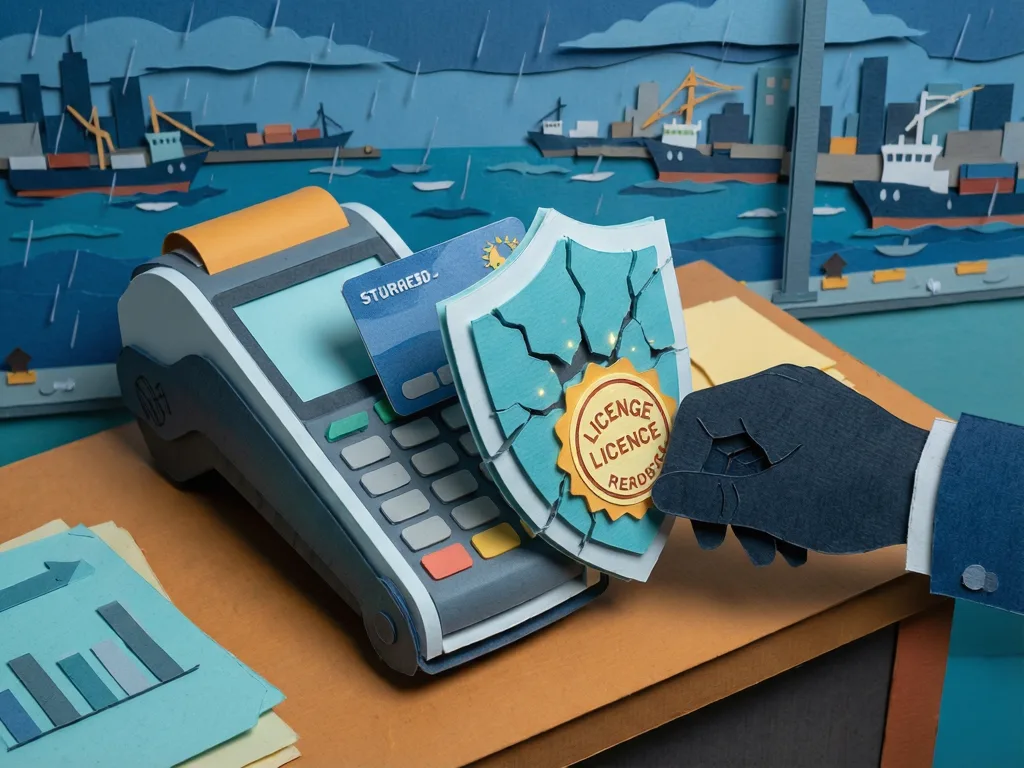
- Hong Kong's Financial Services and the Treasury Bureau told lawmakers that regulators will take enforcement action where necessary against payment platforms operating without required licences, after the Hong Kong Monetary Authority logged 16 complaints about suspected unlicensed stored value services from January 2024 to September 2026.
- One complaint was substantiated, and the complainant reported no monetary loss, the government said in a written reply to the Legislative Council on Oct. 7.
- The Oct. 7 reply, delivered by Acting Secretary Joseph Chan after consulting the Hong Kong Monetary Authority and the Customs and Excise Department, draws the line by regulated activity rather than company label.
What happened
The warning responded to a question from lawmaker Chan Chun-ying about payment aggregators that attract small merchants with low fees and deferred payment offers. Chan Chun-ying cited reports of payment defaults and false payments that had caused merchant losses, and raised concerns about platforms registered only as financial technology companies without financial services licences or public disclosures about their partners and operations.
In the Oct. 7 written reply, Joseph Chan said appropriate enforcement action would be taken as needed under the statutory regulatory framework to protect customers and the public, as reported by Crypto.news. PANews, citing Mobile Payment Network, carried the same message on Oct. 10.
For suspected unlicensed stored value facility operation or non-compliance with the Payment Systems and Stored Value Facilities Ordinance, the Hong Kong Monetary Authority will intervene directly, according to the reply. Depending on the case, the authority would coordinate with other regulators and refer matters to law enforcement agencies. The Hong Kong Monetary Authority is following up with the company involved in the one substantiated complaint and will decide on further action as the case progresses.
Market context
The reply maps the licensing perimeter. Stored value facilities fall under the Hong Kong Monetary Authority. Its consumer guidance lists multipurpose prepaid cards and electronic wallets as examples; these cover facilities that hold value for payments to the issuer and participating third parties, or for transfers between users. Single-purpose facilities used only to purchase goods or services from their issuer fall outside that licensing system, as do payment methods without a stored value function, such as credit cards and Apple Pay.
Currency exchange and cross-border remittance services sit under a separate Customs and Excise Department licence regime created by the Anti-Money Laundering and Counter-Terrorist Financing Ordinance. The government said Customs would take enforcement action against violations of the money service operator licensing regime. It identified services ancillary to a licensed stored value operator's business as one statutory exemption.
Deferred payment services run by banks remain under Hong Kong Monetary Authority supervision, while other providers conducting lending business must hold a money lender licence under the Money Lenders Ordinance. Both agencies assess applicants' competence, integrity and ability to operate fairly during licence reviews, with requirements covering customer checks, record keeping and the handling of client funds.
Why it matters
Hong Kong has spent recent years building a licensed digital asset and payments perimeter, and the warning restates that operating inside it is a legal requirement rather than a marketing choice. The number of complaints is not the strongest part of the signal. Sixteen complaints over the stated period and one substantiated case with no reported monetary loss describe a small sample. The more important fact is the government's restatement that operating without the required licence is not a business-model ambiguity but an offence unless a statutory exemption applies.
The exposure falls most heavily on merchants and small businesses, the group at the centre of the lawmaker's question. If they route payments through a platform that never held a licence, they are not protected by the customer-check, record-keeping and client-fund rules that licensed operators must meet. Payment defaults and false payments reported in the question show the practical risk when fee competition and deferred payment offers outpace licensing status.
The same verification tools apply across the broader digital asset and payments perimeter. The Hong Kong Monetary Authority's guidance says each licensed stored value operator has a unique licence number that can be checked against its public register. The authority also warns that users of wallets or prepaid cards operated outside the licensing system may not have their interests protected. For readers, the compliance test is therefore narrower than a company's fintech registration or marketing description: what activity does the platform perform, and is that activity licensed?
What to watch
The next concrete step is how the Hong Kong Monetary Authority concludes its follow-up with the company behind the single substantiated complaint, and whether that produces further enforcement or a referral to law enforcement agencies.
A wider question is how Hong Kong applies licensing lines as services combine payments, wallets, remittance, and credit-like features. The government has previously outlined plans for new licences across four crypto services, and the current reply reinforces that supervision is assigned by activity. The risk to watch is classification drift: platforms may present as technology aggregators or payment facilitators while handling stored value, transfer, exchange, or lending functions that trigger a licence. Until follow-up cases clarify enforcement intensity, the practical signal from Oct. 7 and Oct. 10 reporting is that licence checks, public registers, and activity-level rules define supervised services.
Comments 0